Product Overview
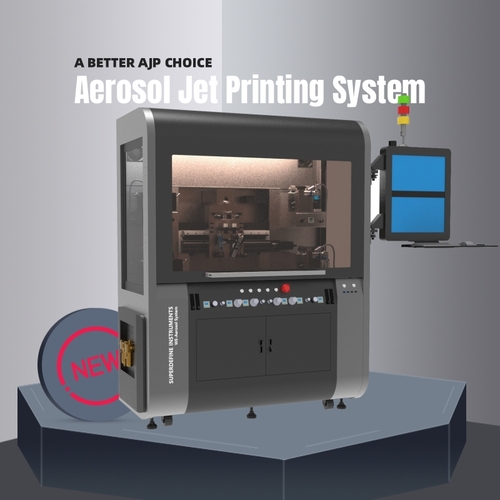
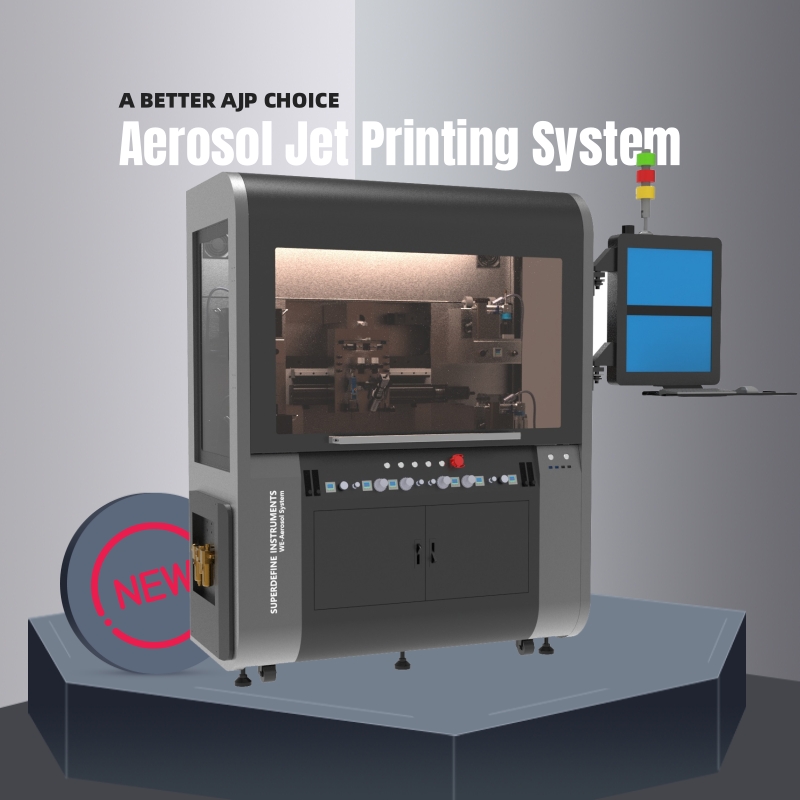
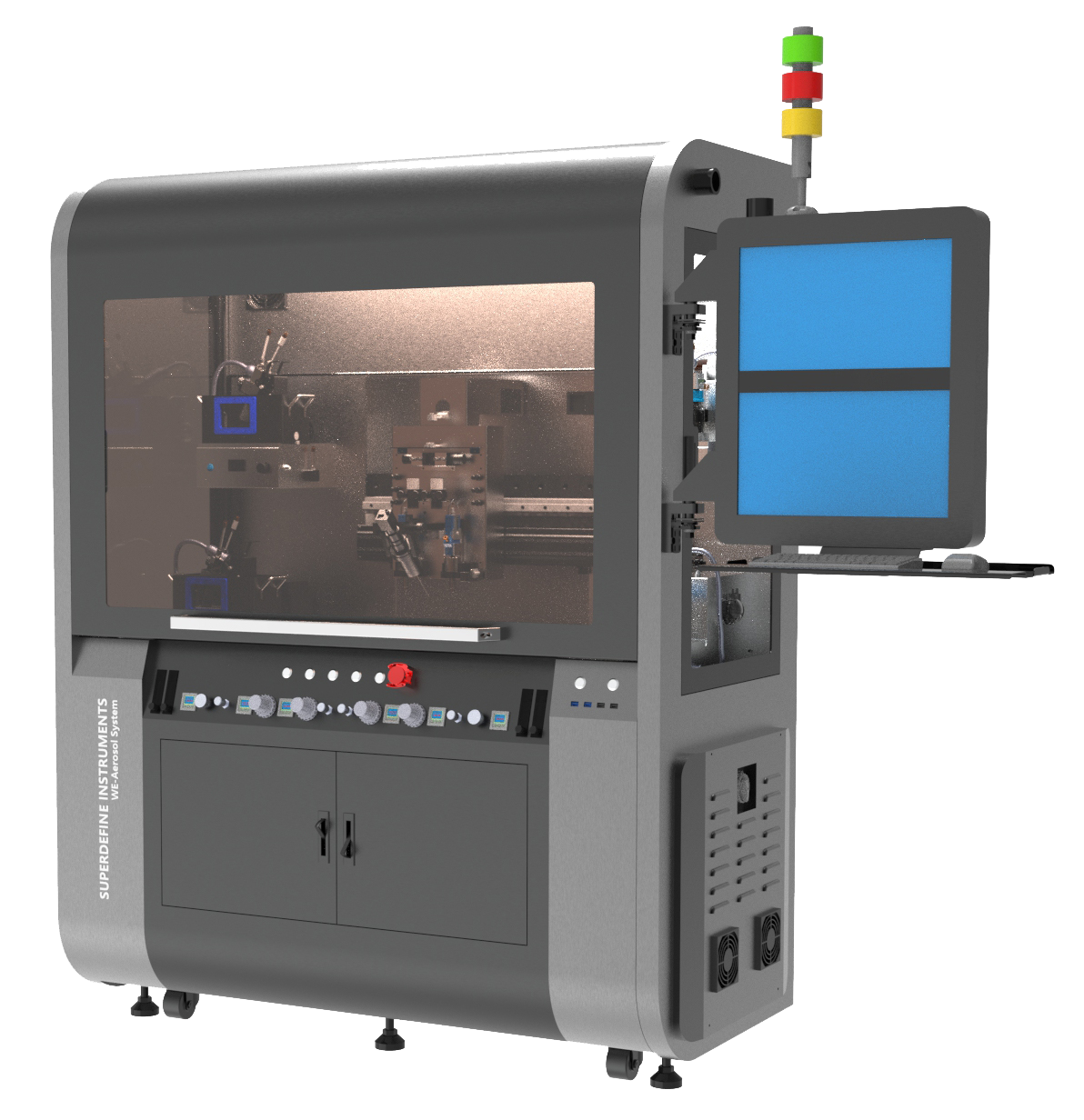
Powered by an innovative high-precision focused sheath gas technology, the aerosol jet printing system combines ultrasonic and pneumatic dual-atomization modes with advanced motion control, multi-level machine vision, and intelligent printing software. Together, these capabilities form a fully integrated, end-to-end precision additive manufacturing platform—from digital design to complex micro- and nano-scale 3D structures.
Designed for maximum versatility and performance, the system supports a wide range of functional inks, including nanometals, ceramics, and polymers, across an ultra-wide viscosity window. It delivers exceptional printing accuracy, robust process control, and superior structural fidelity, enabling reliable and repeatable deposition even for the most demanding materials.
With true non-contact printing on flat, curved, and flexible substrates, the system simplifies process development and ensures high consistency across applications. By dramatically reducing development complexity and accelerating iteration cycles, it empowers users to move faster—from concept design to functional prototypes, and from innovation to real-world impact.
Features and Core Advantages
1. Exceptional Material Compatibility
1)Detailed Functionality:
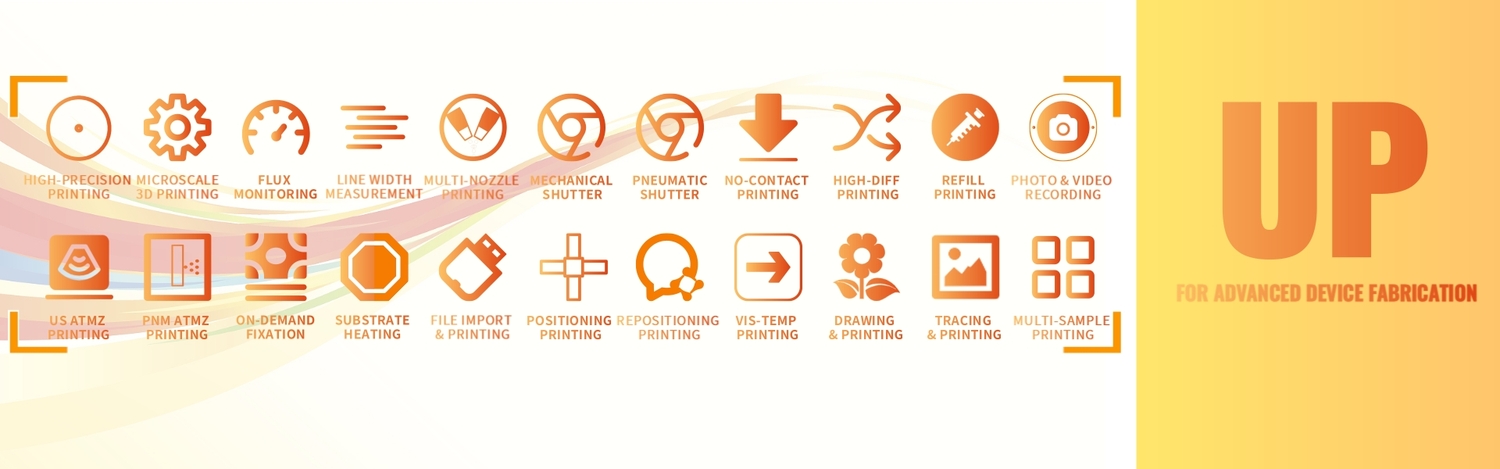
- Dual-mode ultrasonic/pneumatic atomization supports a wide range of materials, from low-viscosity solutions to high-viscosity slurries (1–1000 cP).
- No complex ink modification is required: Common solvents (e.g., water, ethanol) can disperse or dissolve nanomaterials (e.g., silver nanowires, carbon nanotubes, PZT ceramics, epoxy resins) into printable inks.
2)Core Advantages:
- Simplifies ink development by eliminating the need for dispersants and additives, avoiding negative impacts on final product performance.
- Accelerates R&D cycles by allowing researchers to focus on material properties rather than print compatibility.
2. Unmatched Printing Precision and Control
1)Detailed Functionality:
- Utilizes precision focused sheath gas technology to create stable annular flow focus microchannels for accurate droplet delivery.
- Equipped with mechanical/pneumatic dual shutters for millisecond-level material control, preventing leakage and trailing.
- Supports in-situ real-time line width measurement and dynamic parameter adjustment.
2)Core Advantages:
- Achieves ultra-high precision: Minimum feature size of 5μm, with ±1μm repeatability.
- Ensures superior pattern fidelity on glass, silicon, flexible PCB, and curved surfaces.
3. True 3D Additive Manufacturing Capability
1)Detailed Functionality:
- Supports non-contact printing with variable stand-off distance (1–10 mm).
- Powerful Z-axis control enables vertical layer stacking and printing over microstructures for embedded packaging.
2)Core Advantages:
- Unlocks design freedom: Directly prints high-aspect-ratio 3D structures (e.g., >5mm microneedles, micro-lattices, scaffolds).
- Enables structural and functional integration for aerospace and biomedical applications.
4. Fully Intelligent Vision and Monitoring System
1)Detailed Functionality:
- Three-level vision positioning: Global camera (workpiece recognition), local high-precision camera (feature alignment), and tracking camera (real-time nozzle/substrate positioning).
- Real-time process monitoring and video recording for post-process analysis.
- Droplet flux monitoring for process optimization.
2)Core Advantages:
- Ensures "what you see is what you get" precision printing, improving yield for complex workpieces.
- Provides data support for process development and quality control.
5. Intelligent Software and Digital Twin Control Platform
1)Detailed Functionality:
- Smart path planning: Supports importing universal design file formats such as .dxf, and can automatically generate and optimize internal filling trajectories for graphics while intelligently avoiding non-printing travel movements.
- Full digital parameter control: Customizable motion and print parameters saved as reusable "process recipes".
- Visual simulation: Previews and edits print paths to avoid errors.
2)Core Advantages:
- Simplifies operation with an intuitive interface.
- Saves time and material costs through digital twin pre-validation.
6. Highly Modular and Expandable Print Engine
1)Detailed Functionality:
- Dual-mode atomization: Ultrasonic (1.7MHz, adjustable power) for shear-sensitive materials; Pneumatic (digitally stabilized pressure) for high-viscosity slurries.
- Modular printheads: Quick-change nozzles (200μm–700μm), expandable to multi-printhead for multi-material integration.
- Auxiliary systems: Integrated air supply (positive/negative pressure pumps) and substrate heating/vacuum fixation.
2)Core Advantages:
- Ensures stable and controllable printing environments.
- Supports flexible configurations for diverse applications.
Application Fields
- Advanced Electronics & Flexible Optoelectronics: 5G/6G mmWave antennas, flexible OLED electrodes, wearable sensors, embedded components.
- Energy & Storage Devices: Fuel cell electrodes, perovskite solar cells, micro-supercapacitors, solid-state battery electrolytes.
- Biomedical Engineering: Drug delivery microneedles, biosensors, neural electrodes, tissue scaffolds, organ-on-a-chip.
- Aerospace & Defense: Conformal antennas, structural health sensors, radar-absorbing materials, EMI shielding.
- Research & Microfabrication: MEMS/NEMS devices, microfluidics, photonic crystals, metamaterials, novel material patterning.
Conclusion: Your Next-Generation Innovation Platform
The WE-Aerosol System is not just equipment but an open, intelligent, and precise innovation platform. Its unparalleled material tolerance, extreme precision, true 3D capabilities, and full-process intelligence form its core competitive advantages. Whether you are a researcher or engineer, this system provides powerful technical support to turn disruptive ideas into reality—from concept to prototype.